Cloud
Why Kubernetes keeps killing your AI agents
You can run AI agents on Kubernetes, with conditions. The pod-per-agent assumption is what breaks first, and for most teams the fix is the signal their autoscaler reads, not a new substrate.

AI
Read-only cluster context cut mean time to a Kubernetes diagnosis from 191 seconds to 64. Correct diagnoses went from 45 of 50 to 46. What you buy with that speed, and how to measure your own agent before you sign for a better one.
AI
The survey everyone quotes on surprise AI costs has moved, and the stale version is still circulating. The useful part is the join: the system tables and label placements that trace one agent task across both the model bill and the warehouse bill on Snowflake, Databricks and BigQuery.
Engineering
The architecture for autonomous Kubernetes remediation is settled: the model diagnoses, GitOps acts, RBAC bounds. What nobody can tell you is how often their agent is wrong. Here are the metrics that can embarrass you, and why fixing your resource requests may delete more toil than the agent does.
AI
98% of enterprises track AI cost and 11% can forecast it within 10%. The coverage data in the same survey says that is an instrumentation gap, not a modelling one, and a tighter forecast is the wrong thing to want.
Cloud
An operator pointed AI agents at more than a thousand e-commerce sites for an estimated $5 a try and about 23 unattended hours per win. The control that changed in value is knowing what you expose.
Cloud
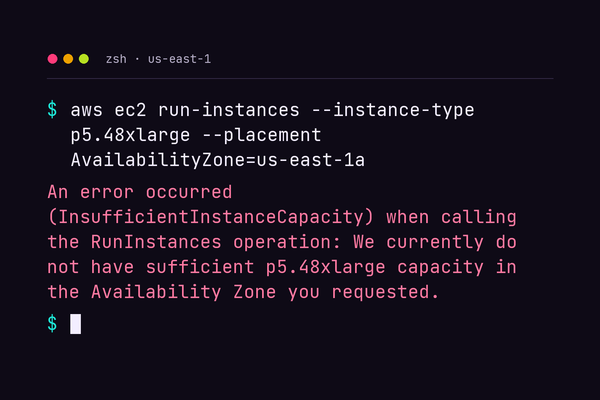
AWS capacity is not sold out, but the slack is gone, and that makes region and instance family design decisions again. What the error codes, the SLAs and the commitment instruments actually say.

AI
Surveys keep finding the same gap: nearly everyone is confident their agent controls are sound, and about a third can show it. Three decisions close most of that gap, and all three are cheaper before the credential exists than after.
Cloud
A 40% jump rarely has one culprit. How to break the total into places to look, in an order that keeps the product safe.
Engineering
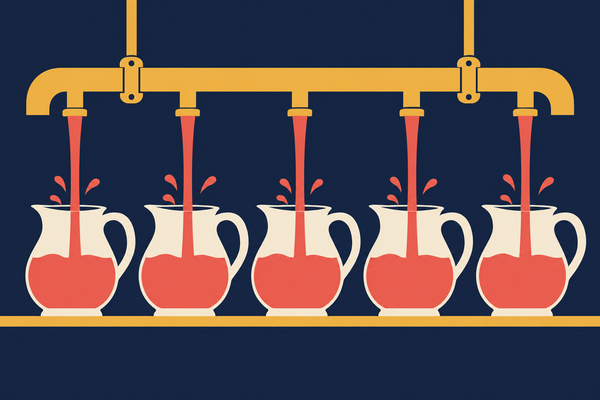
Growth tends to fail at fixed limits rather than gradually. Here are four limits a growing product hits, how to spot each one with tools you already have, and why the database connection limit should come first.
Occasional writing on cloud and AI engineering. No sales email, no drip sequence.

A RAG demo is tested on questions and documents its builder chose. What changes in production, and why a fixed set of fifty real questions is the first thing to build.

What a prospect means when the security questionnaire asks for SOC 2, how Type I and Type II differ in evidence and time, and what you can honestly send while the report is months away.
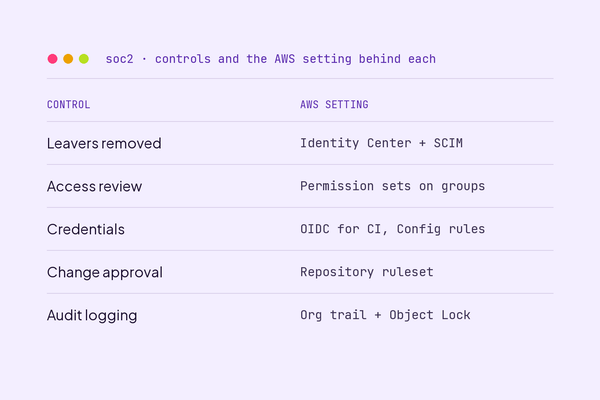
Auditor benchmarks show most SOC 2 exceptions come from access reviews, leavers and change approvals. Here is the AWS configuration that makes each one automatic and leaves evidence behind.
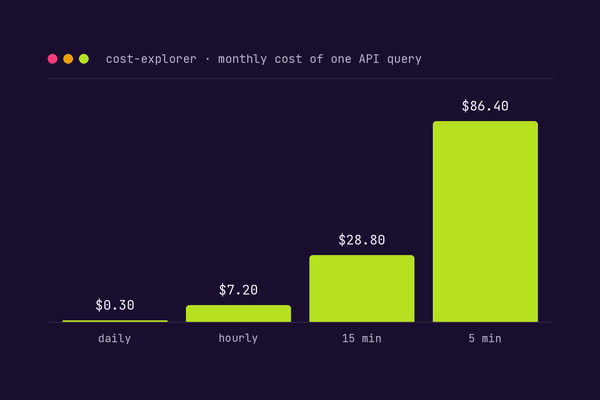
Native AWS cost tools, third-party FinOps software, an engineer's time and outside help buy different parts of the job. Published prices for each, and how to choose.

When the one person who runs your infrastructure gives notice, the risk is the reasoning behind the setup, not the work itself. An audit to run and a plan for the two-week notice period.
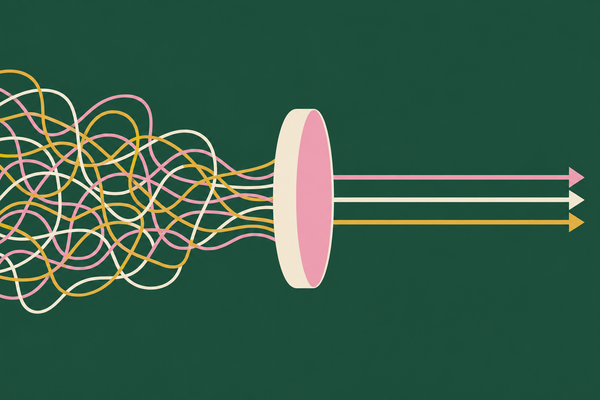
AI tools made reading telemetry, summarising changes and drafting config cheap. Deciding what to do with a misbehaving system, and owning the result, costs what it always did.